
Where's your audacity? What Filmmaking taught me about business
it's not what you think

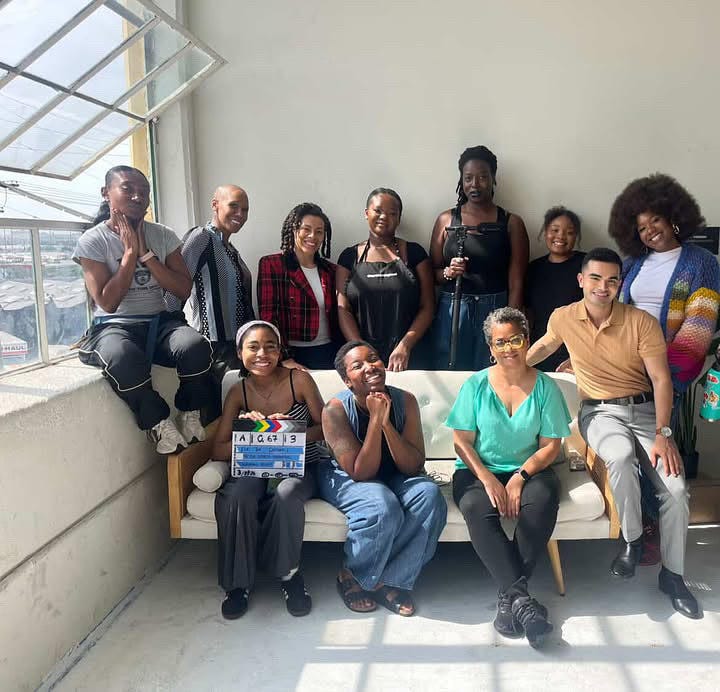
For the last two weeks, I’ve been in production of my short film ‘For The Culture’. The idea was born in January 2025 just after the Los Angeles fires. It was during my time volunteering, serving food, and running errands for people who needed supplies that I met my first creative collaborator, Samia Malik. She came on as a writer and my brand strategist Blessing Santoro joined her as co-writer.
For a year, we worked on the script, and crafted the story we wanted to tell. We shared our perspectives, backgrounds, and experiences working in corporate and decided to tell a story about a young woman who wants more from her life than clocking into a 9-5 and has to stand up for herself in order to take control over her career. The short explores who gets to have ownership over our culture, what it looks like to let go of being a people pleaser and start living life for yourself. I’m really proud of it.
At the start of 2026, it came time to actually make the film. I needed a cast, a crew, and I needed places to film…but I had no budget - just a couple hundred dollars to cover food, gas, and locations. To top it all off, I still didn’t have that great of a network in Los Angeles and I had no idea how I was going to assemble this team.
Fast forward to today - I’m now in post-production, I landed two amazing locations, a cast and crew of 20 people, and I know I made life-long friends in the process. In just a few short months I did what felt impossible and I couldn’t help, but notice the parallels in business.
Let me break it down. Here are the business lessons I’m taking from being a Film Director:
Set a deadline
The short film was just an idea until I set a date. One of the actors I brought on, Magdalena, founder of Nubian Latina Productions gave me this advice - set a date and people will either be available or not, but don’t waver on the date.
She was right.
The deadline not only forced me to get everything in order, but it created a container in which everyone else could either join me or opt out. It gave me structure in a process that didn’t have one. It allowed me to be clear, firm, and intentional about what I needed. If everything is up in the air, it’s really difficult for people to work with you.
Now, when I approach someone that I want to work with, I tell them when I’m available up front. Even if I’m more flexible than that…I give them one option. More often than not, they agree to that time slot. It makes collaboration and deal-making much easier.
Be audacious
I thought that I was bold and amazing at leading a prospect into a sales call. I realized that I was still playing small. When I had a deadline and a film to make, I had no time for playing games, being cute, and taking things slow. I had to take action every single day to find actors, crew, locations, and more. I had to repeat myself over and over and over.
I thought people would be sick of me, but instead they followed along. They wanted to see how everything turned out. Others sent me leads for the roles I needed. Eventually, I built my team. Anyone I spoke with heard about this project. Anyone I met learned about what I needed. Any event that hosted the industry was on my calendar. That’s how I got what I needed - by being loud, by speaking up, and not being shy.
Closed mouths don’t get fed and being cute means that you end up eating less. Increasing my audacity showed me that there is much more opportunity around me than I ever imagined.
Ask for help
This is an extension of my previous point, but I asked for help. I asked for leads, ideas, places, connections, and favors. I couldn’t do this by myself. The beauty of filmmaking is that I learned that anything great is done in a team setting. The people I had around me were there for the ups and downs. If I needed my assistant director to make a phone call, I asked her to do it. If I needed a producer to reach out to their network to find leads on locations, I asked. It wasn’t enough to have a team - I needed to leverage that support and communicate often about what the priorities were and what was needed.
I used to be miss independent and then I had to become…miss delegation. It was the only way this project would come to life. Thinking about my coaching business, I put all that pressure on myself to make it grow. Then I realized I could ask my clients, friends, and peers for resources and leads just the same way I did for this film. Being a solopreneur doesn’t mean you have to have all the answers.
Rejection is none of my business
I got rejected more times in the last 2 months than I did in the past 4.5 years of business. I remember texting my assistant director after we got the news that one of our actors backed out of the project in the middle of filming. She expected me to be more upset and I told her “I don’t even care, I’m just ready to move on”. I literally didn’t even have time to think about everyone who said no to some part of the process. I had to keep going.
That kind of persistence could serve me well in business. What if I had my blinders on and didn’t even process the rejection, but instead thought about the next person who could help me achieve my goal? What if instead of absorbing rejection, I thought “what’s next?”
Rejection is literally none of my business. The people who don’t want to work with me have nothing to do with what I’m creating, so they don’t need to take up any space or time in my life. I also don’t need to hold on to feelings about them what-so-ever. My focus needs to be on the people who will be here with me.
It doesn’t matter if you cry
The cliché is true. People assume that crying makes you weak or it means that you’re having a meltdown.
As a human going through what is easily one of the most difficult things I’ve done…I cried a lot.
You wanna know what happened? Absolutely nothing.
Nothing changed. All that happened is that I shed my tears and picked back up to finish the project. It wouldn’t be a film if someone didn’t cry, after all.
Crying is a somatic release and it’s important to get that energy out of your body. It doesn’t mean that you’re failing, it doesn’t mean that it’s over. It just means that you’re crying.
I always felt better afterwards and it cleared up energy for me to move on. It didn’t stop the making of the film.
That’s what resilience looks like for me. It means I don’t have to pretend that anything is easy in order to get through it. Over the years, I thought my tears represented my limitations. My truth is that I decide what I can handle.
My goal in 2026 is to work with 10 incredible founders, entrepreneurs, and creatives who want to make more money without compromising who they are.
If this story resonates, and this is the time for you to bring on support, send me an email - neysa@gingerandcarrot.com